Conference day:
October 12th - conference [Polis University, Highway Tirana-Durres km.5, Tirana, Albania]
1. Introduction
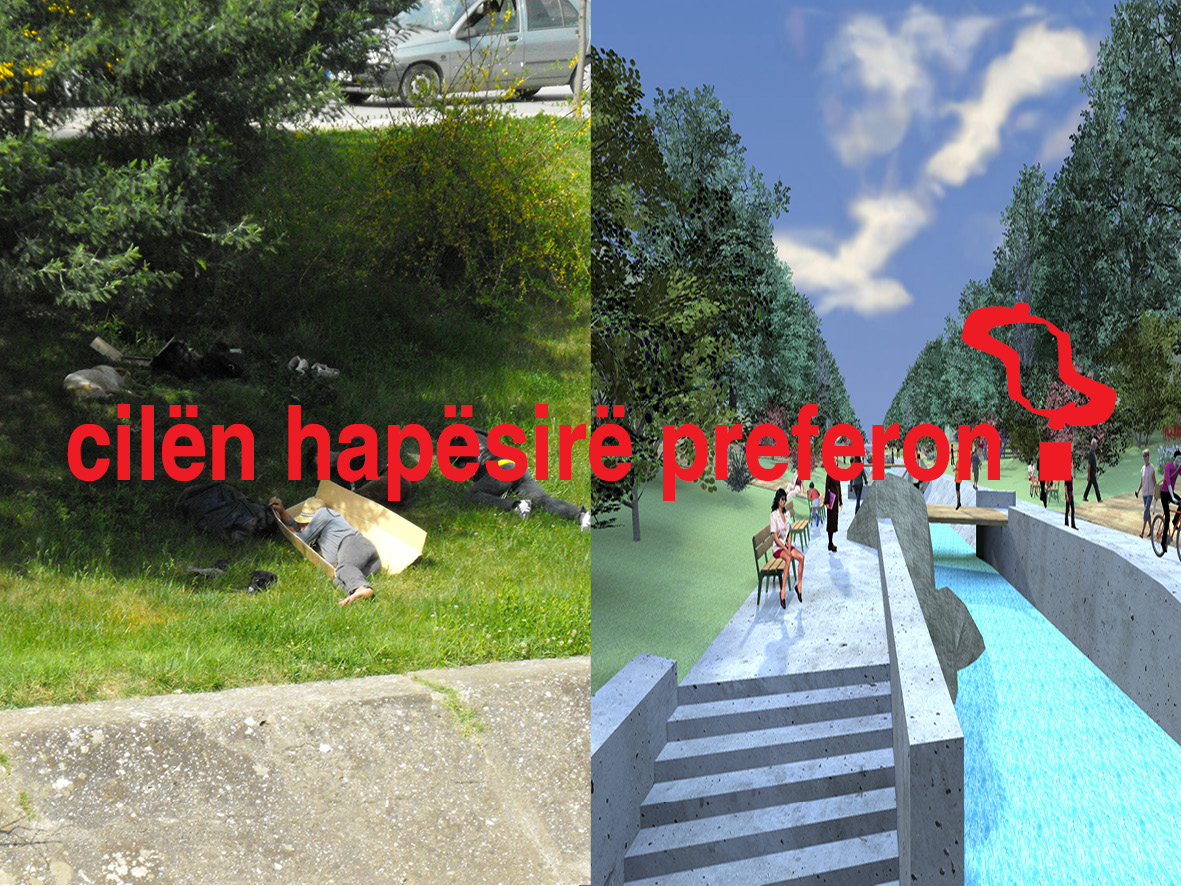
Polis_University in collaboration with Co-PLAN Institute for Habitat Development and the Tirana Municipality are organizing the First TIRANA ARCHITECTURE WEEK. In the frame of this event will be realized a series of activities, exhibitions, urban actions, workshop and a 4 days conference on Re-appropriation of the city. In the frame of the program of conferences, Co-PLAN, Institute for Habitat Development in collaboration with POLIS University, EXPEDITIO and Kor-CSD launches the Regional conference on the transformation of City Squares, as one of the key events of the Tirana Architecture Week. RCSBC_c shall take place in Tirana, October 12, at the premises of POLIS University. The theme of the RCSBC_c is “The transformation of City Squares into new vibrant community places”. Balkan cities are at the focus of the conference’s theme with particular attention to the involved cities in the project, Tirana, Durrës, Kotor and Skopje; looking forward to identify their position in the international arena.
Cities have always been a crucial moment in civilization and creative development. Contemporary cities are facing enormous changes and challenges. Over half the world’s population already lives in cities whose now becoming megalopolis, with districts as large as entire cities. There are new movements of people from “centers” to the immediate suburbs of the cities to seek new standards of living in a “human dimension”. This human dimension seems to be precisely one of the points on which contemporary cities are questioning themselves, and in this framework city squares are a central element in the discussion, more precisely, we could say, the re-appropriation of squares, as a moment of metaphorical representation of the unique identity of the city; as a moment of expression of discomfort or a need for the population. In a globalized world the physical square, cannot yet be replaced by “virtual square” offered by the web. We are thus confronted with the need to rethink the contemporary square using creatively, empowerment practices, and questioning what are the tools and facilities that professionals have to offer to citizens to enable them to interact in the square giving back information, gestures and creativity to the entire community. During the two years of activities of the project, Revival of City Squares in Balkan Cities, artists and professionals made, performances, workshops and round tables on the today situation of the squares in 4 cities of the Balkans, Tirana and Durrës (Albania), Kotor (in Montenegro) and Skopje (in Macedonia) trying to propose, especially through art and active citizens participation, a possible creative development of city squares in the context of the challenges that contemporary cities are facing.
The conference aims is to share with the audience the results of the activities made during those two years of the project and to support a fertile debate on how to define city squares, as a fundamental element in the re-thinking of contemporary cities. The debate should disclose reasons behind the facts and bring innovative knowledge and tools for transforming city squares into attractive places for communities. The conference will explore arts-based approaches to public engagement and animation of public space by bringing together interdisciplinary researchers, practitioners, and students to share comparative experiences, traditions, and insights. During the conference we will also focus on how to catalyze and support the participation of citizens for improving the sustainability of their local environment through artistic practices and approaches.
In the Conference we encourage the participation of Architects, urban planners, designers, artists are invited to share their experiences, their knowledge and inspiration in the endeavour towards the conception of City Squares as a new vibrant centre for people and contemporary cities.
2. Program of the Conference
Introduction: From Center to Periphery and the way back 09.00 / 10.00
In the cities of the most industrialized areas of the world has witnessed over the last twenty years to an emptying of the cities. People prefer to live in the immediate suburbs and move to the city to get to work. In this context of shifting, the central square from Renaissance memory has been abandoned in favor of new “centers” new “squares” like shopping malls or the virtual space. The today movement back to cities central squares could be seen as a new need for appropriation of central spaces of the city to make people voices heard.
Moderator: Dritan Shutina
Speaker: Nahid Majid
Coffee Break 10.00 / 10.15
Session 1: The Inclusive Square 10.15 / 11.45
“Public places are the space in which diverse groups of people, in terms of their class and ethnicity, gender and age, are brought together, with the possibility for interaction and communication.” The role of city squares and public spaces in general as places accessible to all, that every citizen can and is entitled to use, is broadly recognised. Squares are places for social interaction, open to all people and their freely chosen actions. But then, who is responsible for the planning, design, using and managing of city squares and public spaces? Do we all have the same role, the same right and responsibility? Usually the responsibility for planning of public spaces is given to urban planners and architects, but who is really shaping their usage: local governments, market or citizens? Nowadays, citizens, civil society organisations, an independent art scene and other interested parties can play a major role in the very creation, shaping, preservation and maintenance of public spaces.
Some of the challenges we are facing in this process include: How to design or redesign a square for all, a space that respects gender, age, abilities and needs? How to involve everybody /all citizens, all different stakeholders, including local governments, decision makers, businesses, NGOs, as well as visitors / in the planning, using and managing of city squares? How to manage this process and its implementation, and make it transparent and visible to all citizens? What are the possible methods and tools that can be used? Are there any restrictions that need to be defined? What are the benefits from the involvement and participative process? Are Public Goods = Public Welfare? Are there examples of good practice?
Moderator: Sandra Kapetanoviç
Speakers: Stealth Unlimited (Ana Džokić – Mark Neelen), Elvan Dajko
Session 2: Public Art, Art in Public Space 11.45 / 13.15
The traditional boundaries between art and architecture are increasingly blurred in work that has been variously described as site-specific art, public art and urban intervention. In art, such work has been variously described as contextual practice, site-specific art, public art, and in architecture, as conceptual design and urban intervention. Art and Architecture redefines such work as ‘critical spatial practice’. Rendell visits works produced by galleries who operate ‘outside’ their physical limits, commissioning agencies and independent curators who support and develop ’site-specific’ work and collaborative groups who produce various kinds of critical projects from performance art to urban design, asking crucial questions about the nature of public art and about the notion of ‘function’ in art and architecture. Art in Public Space has a concrete possibility of re-appropriation of the space and the possibility to raise social issues and problems related to the connections between people and possibilities.
Moderator: Stefano Romano
Speakers: Network Nomadic Architecture, Claudia Zanfi
Launch Break 13.15 / 14.15
Session 3: The Spontaneous Square – Challenges and Practices 14.15 / 15.45
“The highest and best form of efficiency is the spontaneous cooperation of a free people” (Woodrow Wilson).
The way we look at city squares nowadays in the Balkans certainly is subject for understanding how these habitats are being transformed in functions and roles to meet various community needs. On the other hand, it is exactly these various and diverse communities that influence the conceptual shape of these squares through their energy. The understanding of this reciprocal influencing energy and furthermore the use of it for the welfare of citizens and city life would bring us in creative and spontaneous city making process for Balkan cities.
As defined, spontaneous applies to what arises naturally rather than resulting from external constraint or stimulus. Inspiration, creativity and spontaneity are the driving forces of development in any value oriented system.
Therefore, the issue of city squares has to be understood in a much broader fashion. City squares (and here we think not only of the main square, but of all open public spaces and small city squares) embody the energies of people and therefore we have to understand what they mean for the social and cultural expression of citizens. Making great public spaces and places the norm rather than the exception is closely connected and depends on introducing policy-makers at all levels (state, and city governments) to new ideas and approaches. Indeed, city squares are not just designed on the urban planners’ drawing boards (The design is a means to an end, not an end in itself!), but they should be seen as possibility for spontaneous and creative city making, where all concerned play a role.
Moderator: Sonja Damcevska
Speakers: Vangel Karaivanov, Stefanka Hadzi Pecova, Silvi Jano
Conclusion 15.45 / 16.00
Conference results will be part of a publication which will be ready at the end of the project.
For info on the conference please contact Stefano Romano at the following address:
sr.inbox@gmail.com